
Plastic grows and shrinks with temperature several times more than steel does. A plastic part can therefore measure differently in two rooms.
That quirk is one reason plastic machining is its own skill and not just metal machining with softer material. This guide explains where plastic beats metal and how UHMW and Delrin compare. It also covers what to send a shop for a plastic part quote.
The short version. Plastic CNC machining turns engineering plastics such as UHMW and Delrin into precise parts on mills and lathes. It works best where you need low friction, light weight, quiet running or electrical insulation. It also needs different tooling and tolerance planning than metal.
Where plastic beats metal
Plastic is not a cheap substitute for metal. In the right spot it simply works better.
- Low friction. Bushings, guides and wear strips slide with far less lubricant.
- Light weight. Moving parts need less energy to start and stop.
- Quiet running. Gears and conveyor parts make less noise than metal ones.
- Electrical insulation. Plastic parts keep current where it belongs.
- Corrosion resistance. Plastic does not rust, and many types handle common chemicals well.
Plastic loses on strength, stiffness and heat resistance. If the part carries heavy loads or runs hot, metal is usually the safer pick.
UHMW and Delrin side by side
Perfect Machining lists UHMW and Delrin among the engineering plastics it machines. They look alike in a bin but behave very differently in service.
| Property | UHMW | Delrin |
|---|---|---|
| Wear and abrasion | Excellent, among the toughest plastics against abrasion | Good |
| Friction | Very low, slippery surface | Low |
| Stiffness | Softer and more flexible | Stiff and strong for a plastic |
| Size stability | Moves more with heat | Holds size well, better for tight fits |
| Moisture | Absorbs very little | Absorbs very little |
| How it machines | Soft and gummy, forms stringy chips | Cuts cleanly with a good surface finish |
| Typical parts | Wear strips, liners, guides, rollers | Gears, bushings, insulators, precision fixtures |
This is a general guide. The exact grade and supplier affect real results.
UHMW
UHMW (ultra high molecular weight polyethylene) takes impact and abrasion better than almost any other plastic. It is slippery and tough, which makes it a favourite for liners, guides and wear strips. That softness cuts both ways, though. UHMW flexes under clamping pressure and moves with heat, so tight tolerances take extra care.
Delrin
Delrin is a brand name for acetal, a stiff plastic that machines cleanly. It holds size well, runs with low friction and takes a good surface finish. That is why it turns up in gears, bushings and small precision parts. Delrin is stiffer than UHMW but less forgiving of sharp impact.
How plastic behaves under the cutting tool
Plastic does not carry heat away like metal. Heat stays at the cut and can melt the surface, so the cutter needs to be sharp and run at settings chosen for plastic.
The other challenge is movement. A plastic part can spring back after a cut, shift as internal stress is released, and swell or shrink with temperature. Shops that machine plastic regularly plan for this with careful clamping, light finishing passes and realistic tolerances.
Because of this, plastic tolerances are usually looser than the best metal tolerances. Tell the shop which dimensions truly matter so the effort goes where it counts.
Industrial plastic parts that suit CNC machining
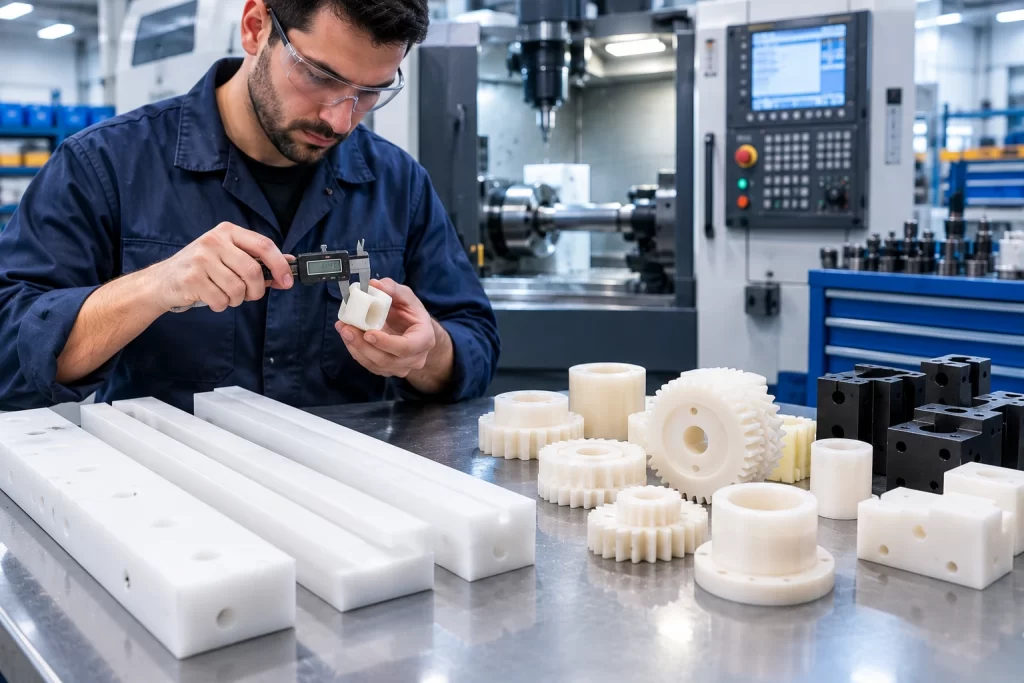
Industrial plastic machining often covers parts like these.
- Wear strips and liners
- Guides and rollers
- Gears and bushings
- Spacers and bearing parts
- Insulators and electrical standoffs
- Fixtures and jigs
- Conveyor components
Plastic is also a quick way to test a fit or a shape before you commit to metal. Our guide to CNC prototype manufacturing in Canada shows how that early stage works.
The Mississauga shop serves automotive, defense, electrical, electronics, hydraulic fittings, hardware and machine manufacturing customers.
When metal is still the better choice
Heavy loads, high heat and tight tolerances all point back to metal. For strong, light parts, aluminum is often the answer, and our guide to aluminum CNC machining services explains the grades. For parts that carry heavy loads, read about steel CNC machining in Canada.
For a wider comparison of every material the shop works with, see our CNC machining materials guide.
What to send for a plastic part quote
A complete request gets you a faster and more accurate quote. Gather these items first.
- CAD files or drawings
- Plastic type, such as UHMW or Delrin, and color if it matters
- Where the part will be used and what it touches, including heat, moisture, chemicals and sunlight
- Loads, speeds and operating temperature, if known
- Critical dimensions, and which tolerances truly matter
- Surface finish needs
- Quantity per order and how often you expect to reorder
- Inspection needs, including a first article report or 100% inspection
- Delivery timeline
Unsure which plastic fits? Describe where the part will live and what it touches, and the team can review your drawing and suggest a material before quoting.
Ordering the same part again and again? Read our guide to CNC production machining in Canada. You can also see the full range of CNC machining services in Canada.
Questions buyers ask about plastic machining
What is plastic CNC machining?
Plastic CNC machining uses computer-controlled mills and lathes to cut engineering plastics such as UHMW and Delrin into finished parts. It suits parts where metal would be heavier, noisier or prone to rust.
What plastics does Perfect Machining machine?
UHMW and Delrin are listed among the engineering plastics the shop machines. If you need another plastic, such as nylon or PEEK, ask when you request a quote.
Which is better, UHMW or Delrin?
UHMW handles abrasion and impact best, which suits liners and wear strips. Delrin is stiffer and holds size better, which suits gears, bushings and precision parts.
Can plastic parts hold tight tolerances?
Yes, within limits. Plastic moves with temperature and can spring back after cutting, so tolerances are usually looser than on metal parts. Share your critical dimensions so the shop can plan for them.
Is plastic cheaper than metal to machine?
It can be. Plastic cuts quickly and does not wear tools as fast as steel. Material, part size, tolerances and quantity still drive the final price.
What size plastic parts can be machined?
CNC milling covers a work envelope of 50 x 28 x 20 inches. CNC turning covers parts from about 1/8 inch to 17 inches in diameter and up to 72 inches long, with a 3 inch spindle through-bore.
How are plastic parts inspected?
Plastic jobs follow the same three steps as other materials. A first article inspection checks every dimension on the first part, in-process checks run during machining, and a final inspection samples the finished lot. 100% inspection is available where the drawing requires it.
What should I send to get a plastic part quote?
Send CAD files or drawings, the plastic type, where the part will be used and what it touches, critical dimensions, finish needs, quantities, inspection needs and your delivery timeline.
Need plastic parts machined in Canada?
Send your drawings, plastic type, quantities and operating conditions. The Perfect Machining team in Mississauga will review them and come back with a quote.
Request a plastic machining quote
Prefer email? Write to info@perfectmachining.ca.